

ABSTRACT
Accurate measurement of fluids such as polyurethane, epoxy, resin, paint, solvent-based coatings, and heavy oils in the chemical and petrochemical industries directly impacts product quality, raw material consumption, reaction ratio, and process repeatability. In particular, high-viscosity fluids, that is, liquids with high resistance to flow, and non-Newtonian fluids, whose viscosity varies depending on flow conditions, may lead to unstable results in standard flow measurement methods.
In this study, the importance of gear-type flowmeters, namely positive displacement flowmeters that count the fluid in small fixed-volume packets, in the chemical industry is explained, and the role of gear-type flowmeter technologies in the chemical and petrochemical industries, together with VSE Volumentechnik solutions, is examined.
1. INTRODUCTION
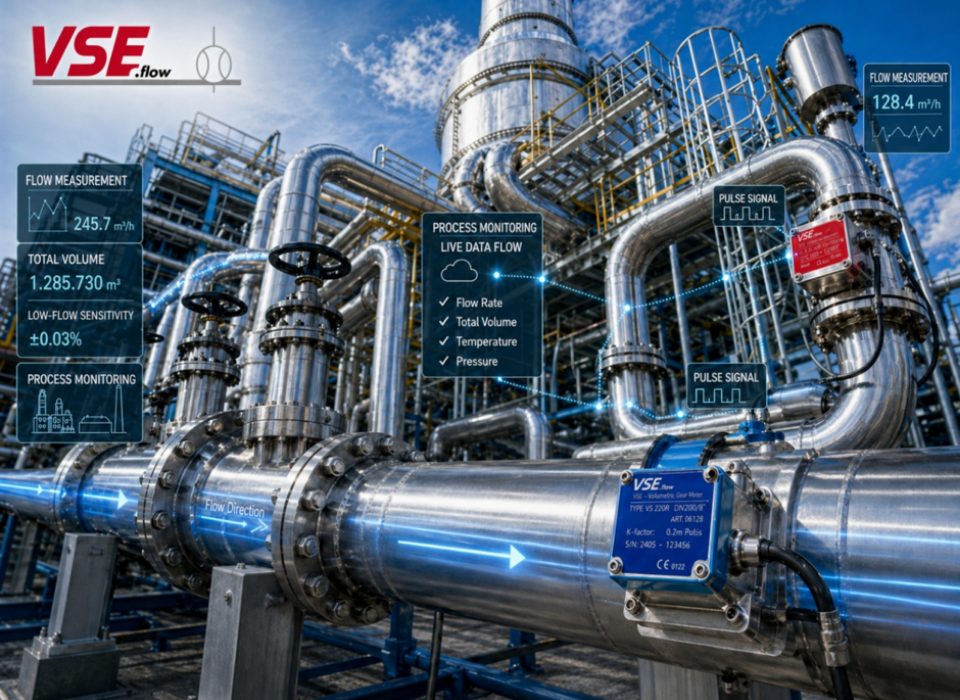
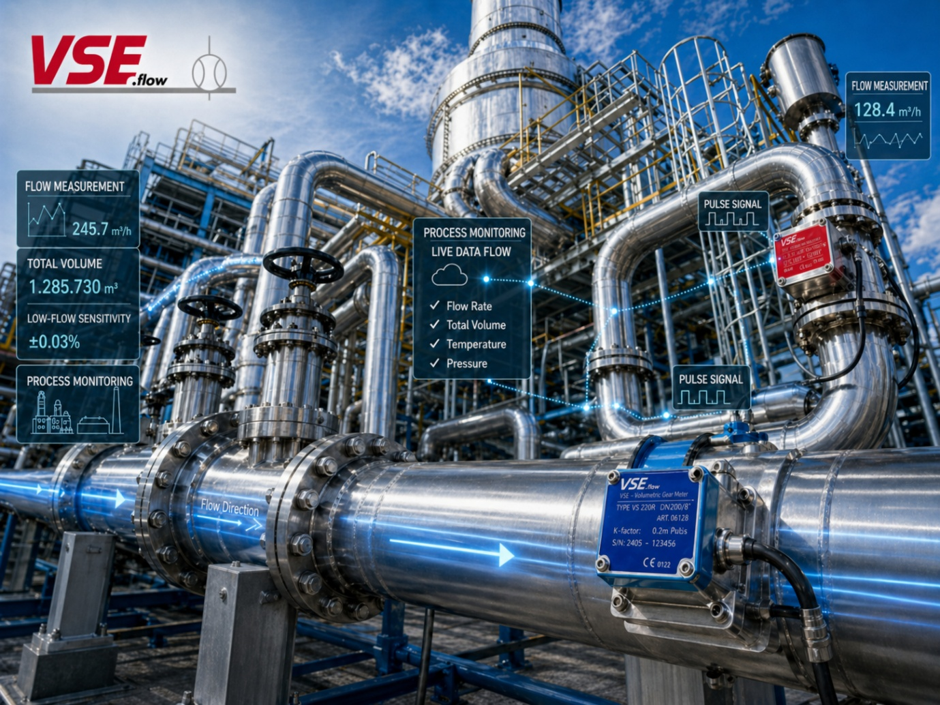 Figure 1. High-precision flow measurement technology [1].
In modern chemical industries, accurate flow measurement, defined as the measurement of the amount of liquid passing per unit time, is critical for dosing accuracy and for maintaining mixing ratios. The balance between polyol and isocyanate components in polyurethane systems, the resin-to-hardener ratio in epoxy resin applications, and the amount of pigment and binder in paint production directly affect the quality of the final product [1].
The main challenge encountered in these lines arises from rheology, namely, the flow behavior of the fluid. As viscosity, defined as a fluid’s resistance to flow, increases, the flow becomes heavier, slower, and more difficult to control. In non-Newtonian behavior, the liquid may behave more fluidly or more viscously depending on mixing speed, pump pressure, or shear effects. This may cause the flowmeter to detect the same liquid with different flow characteristics at different stages of the process.
In turbine-type flowmeters, which measure flow velocity by the rotor’s of a rotor by the flow velocity, high viscosity may make the free rotation of the rotor more difficult. In this case, the sensor does not detect the actual flow rate, but the rotor movement is slowed down by viscosity. In ultrasonic flowmeters, which rely on the propagation of sound waves through the flow, polymeric or highly viscous liquids may weaken the acoustic signal. In both cases, the measurement is obtained not directly from the passing volume but by inferring it from the fluid’s velocity or the signal behavior.
Gear-type flowmeters operate according to the positive displacement principle, in which the fluid is divided into and counted as defined volume compartments. Two gears are positioned inside the housing with precise tolerances. The fluid fills small volume pockets formed between the gear teeth and the housing; as the gears rotate, these pockets are carried from the inlet to the outlet. Thus, the liquid can be monitored not as a continuous, undefined flow, but as measurable volume increments [2,3].
Each tooth passage is converted into a pulse signal by magnetic or magnetoresistive sensors, which are electronic elements that detect gear motion without contact. As the number of pulses increases, the total volume passed through the flowmeter is calculated; as the pulse frequency increases, the instantaneous flow rate is determined. The K-factor used in this calculation, namely the number of pulses generated per liter or per unit volume, is the fundamental calibration information that defines the volumetric measurement characteristic of the flowmeter for the control system.
Another important parameter used in the calculations is interpolation, which is a method of electronically dividing a measurement step into smaller sub-steps. This becomes particularly important at low flow rates. When the sine-cosine signal obtained from a tooth passage is divided into smaller digital segments, as shown in Figure 2, the control system receives signals more frequently. As a result, near-zero flows, short-duration dosing operations, and bidirectional flow changes can be monitored more clearly.
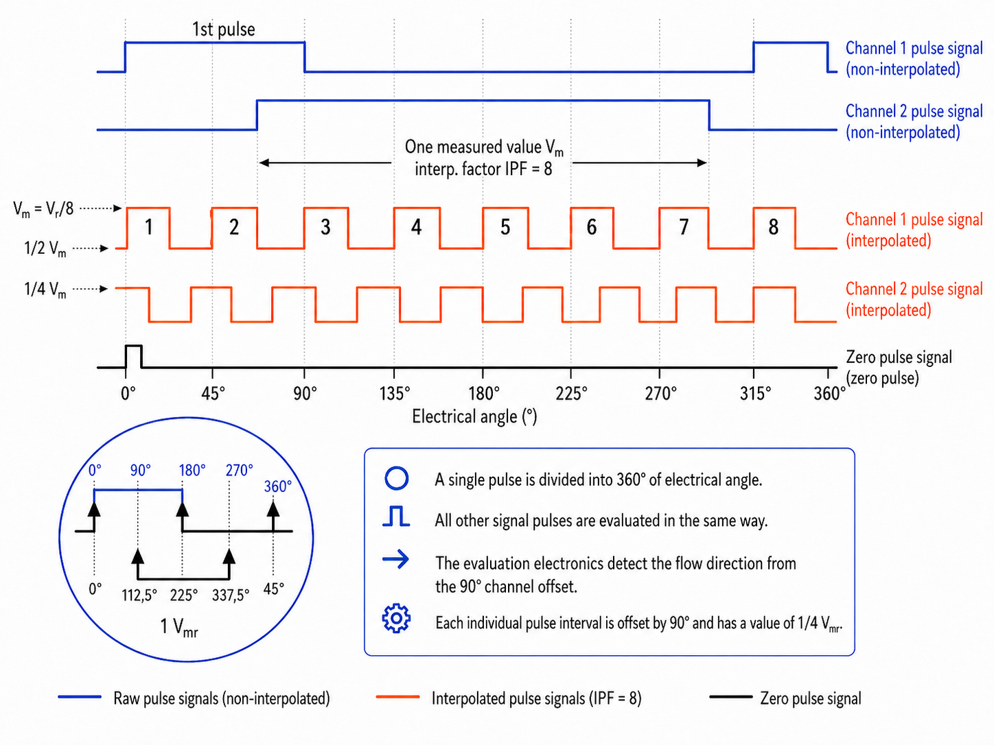 Figure 2. VSI high-resolution pre-amplifier timing diagram
2. APPLICATION AREAS IN THE CHEMICAL INDUSTRY
The VSE product family does not consist of only a single flowmeter model; it comprises a mechanical measuring body, signal amplification units, and digital communication layers. This structure enables the most suitable measurement solution to be selected based on the properties of the relevant fluid, process risks, and automation requirements [4,5].
2.1 VSI Pre-Amplifier: Measurement Resolution Solution at Low Flow Rates
The VSI pre-amplifier is a signal processing layer that converts the flowmeter’s mechanical motion into a high-resolution electronic signal. MR sensor technology, a sensor structure that precisely detects changes in the magnetic field, enables monitoring of both flow velocity and flow direction using sine and cosine signals. The 1/4-tooth pitch offset used in this structure, in which two sensors are positioned with a 90-degree phase difference, enables distinguishing between forward and reverse flow directions [6].
Through digital interpolation, a single tooth passage is divided into smaller measurement steps, thereby increasing the flowmeter’s resolution. This feature provides a significant advantage for micro-dosing, that is, the controlled delivery of very small liquid volumes, the monitoring of near-zero flows, and more stable quality control in short-cycle production processes.
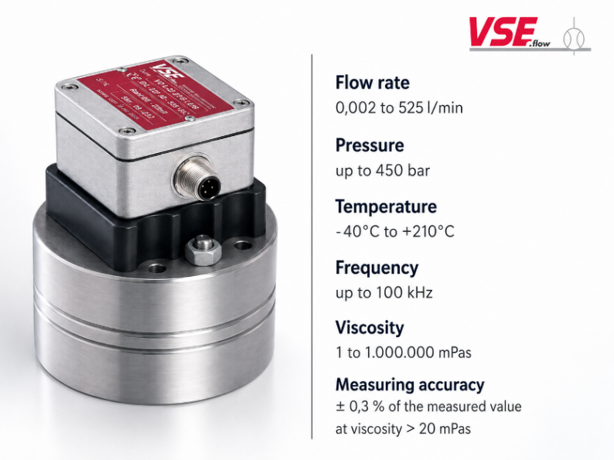
Figure 3. Specifications of the VSI+ series gear-type flow meter [6].
2.2 VS Series: High-Pressure and Viscous Resin Lines
The VS series is a heavy-duty gear flowmeter solution that stands out in processes requiring high pressure resistance and mechanical strength. It can be used to measure polyurethane, epoxy resin, heavy mineral oil, and similar clear but viscous liquids. Thanks to its rigid body structure, which maintains its form under pressure, and its precise gear tolerances, which ensure repeatable pocket volumes, it delivers reliable, stable measurement performance [2].
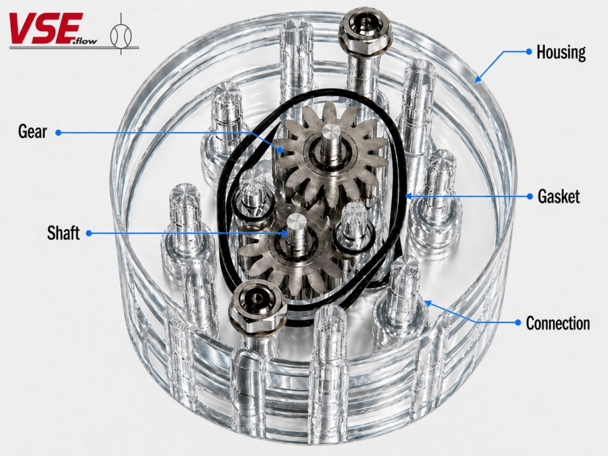
Figure 4. Internal structure of the VS series gear flowmeter
2.3 VHM Series: Abrasive Fluids and Applications Requiring Cleaning
The VHM series is a gear flowmeter solution that stands out for measuring paint, varnish, ink, solvent-based coatings, and particle-containing fluids. In such applications, not only measurement accuracy but also the flowmeter’s cleanability are critical. If there are excessive dead zones, namely internal cavities where flow slows down, and residues may accumulate, resin or paint residues may dry out; this may lead to cross-color contamination, deterioration of product quality, and the risk of mechanical blockage. The VHM series is reliable against such risks.
Thanks to its optimized internal geometry, the VHM architecture is designed to enable the cleaning fluid to sweep the measuring chamber more effectively. Therefore, in lines where frequent product changes, color changes, or solvent-based cleaning are performed, the VHM series can be considered not only a flowmeter, but also process equipment that helps reduce maintenance time and maintain process continuity [2].
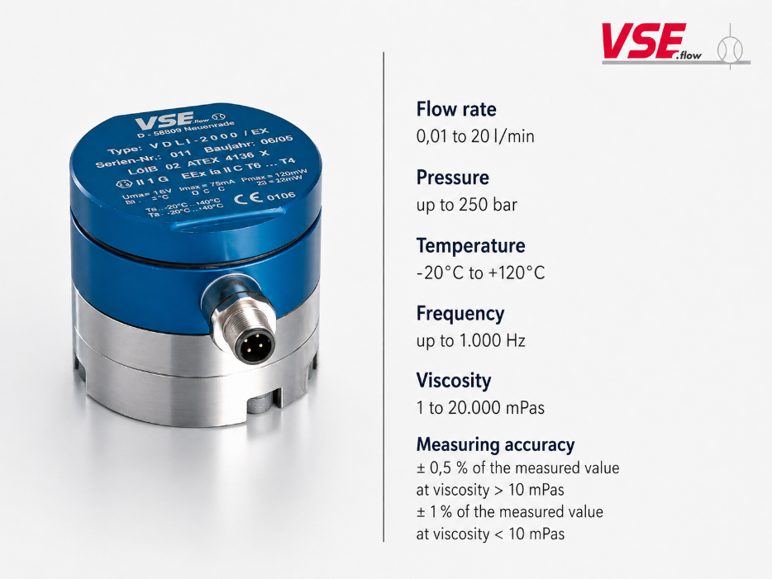
Figure 5. Specifications of the VHM series gear-type flowmeter [2].
2.4 EF Ecoflow Series: Economical and Compact General Chemical Solution
The EF Ecoflow series is an economical gear flowmeter option for general chemical applications, including heavy-bodied high-pressure solutions, low-pressure solvent transfer, simple spray coating systems, and central lubrication lines. The primary value of this series lies in its ability to make the gear-type measurement principle more accessible and applicable by reducing costs arising from unnecessarily high technical specifications [3].
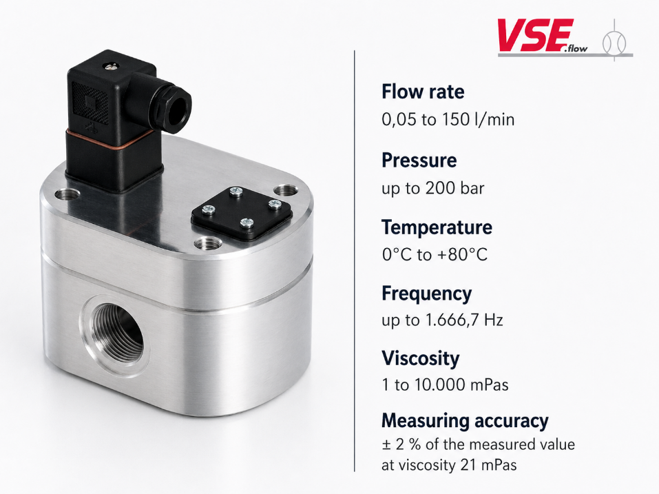
Figure 6. Specifications of the EF series gear-type flowmeter [3].
2.5 ATEX Standards and Safety Architecture in Explosive Areas
In chemical and petrochemical plants, explosive atmosphere risks may arise in lines containing volatile fluids such as toluene, hexane, alcohol derivatives, and light hydrocarbons. ATEX, the European safety regulation for equipment intended for use in explosive atmospheres, sets out the safety requirements for electrical and electronic equipment used in such areas. The availability of VSE flowmeter technologies with ATEX-certified options positions the measurement solution not only in terms of performance, but also in terms of field safety [1].
2.6 Industry 4.0, Digitalization, and IO.flow® Integration
The IO.flow® module can be considered as a converter layer that connects the VSE flowmeter signal in the field to an IO-Link-based digital automation infrastructure. IO-Link, an industrial communication structure that enables bidirectional data exchange between the sensor and the control system, can transmit not only the instantaneous measured value, but also device information, parameter settings, and status data to the automation system.
This structure provides an important advantage for retrofit applications and for digitalizing existing systems without major mechanical modifications. An older-generation flowmeter infrastructure operating in the field can be made more monitorable, parameterizable, and capable of generating data by using an appropriate electronic interface layer. Total operating time, total volume passed, and device status data can be evaluated for predictive maintenance, namely, estimating maintenance requirements before a failure occurs [1,7–9].
Figure 7. IO.flow® solutions [7–9]
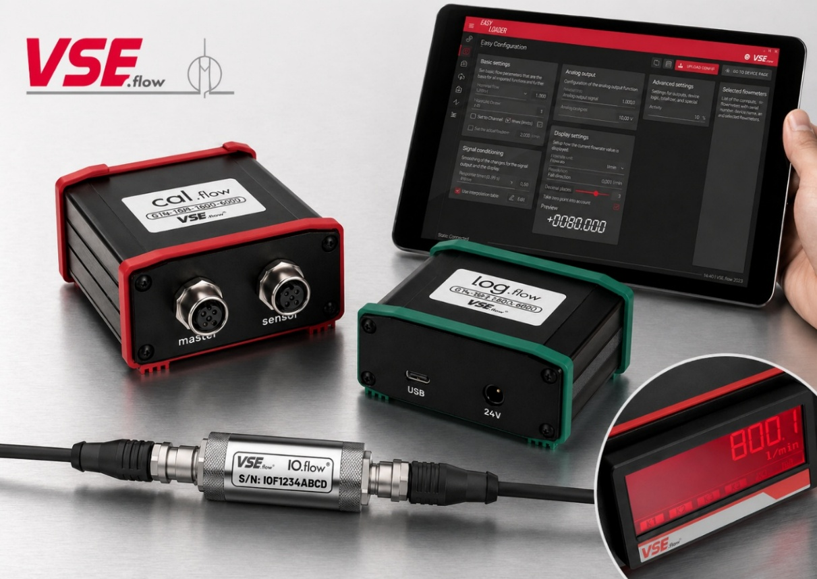
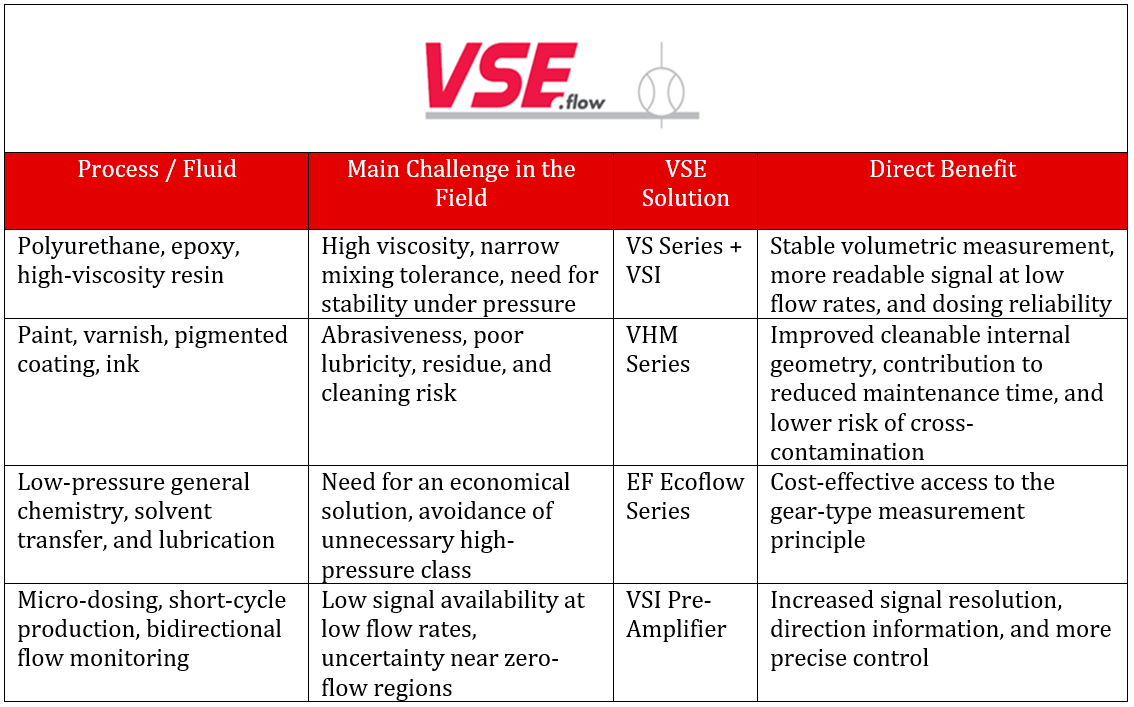
Table 1. VSE.flow solutions and application areas

3. CONCLUSION
Accurate flow measurement in the chemical and petrochemical industries is a critical engineering factor for final product quality, process stability, and production reliability. High viscosity, non-Newtonian flow behavior, abrasiveness, and the need for low-flow measurement encountered in polyurethane, epoxy, resin, paint, and solvent-based processes may limit the performance of conventional measurement methods based on velocity or acoustic signal interpretation.
Since gear-type flowmeters measure the fluid in fixed, repeatable volume increments, they offer a strong alternative in such demanding applications. The VSE product family forms an integrated solution structure that extends this measurement principle according to different process requirements. The VS series stands out in heavy-duty and high-pressure applications; the VHM series in cleanability and abrasive fluid conditions; the EF Ecoflow series in economical general applications; the VSI pre-amplifier in measurements requiring high signal resolution; and the IO.flow® module in automation infrastructures focused on digital integration and predictive maintenance.
The solutions examined in this study enable the measurement equipment to be considered not merely as a technical component but as a strategic investment that supports process efficiency, product quality, and operational continuity.
4. REFERENCES
[1] “Flow Rate Measurement Instruments - VSE Volumentechnik GmbH.” [Online]. Available: https://www.vse-flow.com/en/. [Accessed: 16-Mar-2026].
[2] “VHM Gear Flow Meter - VSE Volumentechnik GmbH.” [Online]. Available: https://www.vse-flow.com/en/vhm-gear-flow-meter.html. [Accessed: 15-Apr-2026].
[3] “VSE EF Ecoflow Aluminium Flow Meter - VSE Volumentechnik GmbH.” [Online]. Available: https://www.vse-flow.com/en/vse-ef-ecoflow-gear-flow-meter.html. [Accessed: 15-Apr-2026].
[4] “Applications - Fluid Technology Group.” [Online]. Available: https://www.e-holding.de/en/applications.html?company=vse. [Accessed: 16-Mar-2026].
[5] “Custom Solutions - VSE Volumentechnik GmbH.” [Online]. Available: https://www.vse-flow.com/en/custom-solutions.html. [Accessed: 15-Apr-2026].
[6] “VSI Pre-Amplifier - VSE Volumentechnik GmbH.” [Online]. Available: https://www.vse-flow.com/en/vsi-pre-amplifier.html. [Accessed: 15-Apr-2026].
[7] “IO.Flow® Converter - VSE Volumentechnik GmbH.” [Online]. Available: https://www.vse-flow.com/en/io-flow-r-converter.html. [Accessed: 15-Apr-2026].
[8] “Cal.Flow Calibration System - VSE Volumentechnik GmbH.” [Online]. Available: https://www.vse-flow.com/en/cal-flow-calibration-system.html. [Accessed: 15-Apr-2026].
[9] “Electronic Evaluation Devices - VSE Volumentechnik GmbH.” [Online]. Available: https://www.vse-flow.com/en/electronic-evaluation-devices.html. [Accessed: 15-Apr-2026].
Özgür ÖNDER
Design Engineer
Electrical-Electronics Engineer
Hipaş Hidrolik Pnömatik San. ve Tic. A.Ş.