



1. Introduction
Modern building envelopes are increasingly required to satisfy conflicting demands: high thermal resistance, near-zero air leakage, effective moisture control, and structural integrity, all within a limited thickness and budget. Historically, these functions have been disaggregated into separate material layers—insulation boards, vapor barriers, sealants, and mechanical fasteners—each applied in a distinct step. This fragmented approach inevitably introduces thermal bridges at fastener points, interfacial gaps between dissimilar materials, and long-term durability risks due to differential movement and lack of chemical compatibility between layers.
Adhesives and sealants have traditionally played a subordinate role, limited to joint filling or perimeter bonding. However, a new generation of hybrid polymer adhesives—particularly silane-terminated polyether (STP) and modified silane polymer (MS) systems—offers the potential to unify load-bearing bonding, thermal insulation, and hermetic sealing within a single continuous layer. These materials exhibit low thermal conductivity, high water vapor resistance, excellent elasticity, and robust adhesion to polar and non-polar substrates.
This study aims to quantitatively evaluate a commercial STP-based hybrid adhesive as a combined insulation-sealing-bonding layer in building envelope applications. Specific objectives are: (1) to determine thermal conductivity across a service-relevant temperature range, (2) to measure water vapor transmission rate as an indicator of vapor barrier performance, (3) to assess adhesion durability under thermal cycling, (4) to quantify air leakage through a standardized joint, and (5) to compare these properties against conventional polyurethane foam and acrylic sealant references. The overarching question is whether a single adhesive layer can replace multiple discrete components without compromising building physics performance.
2. Materials And Methods
2.1 Materials
2.2 Sample Preparation
All substrates were cleaned with isopropanol (purity ≥99.5%) and dried at 23 ± 2°C and 50 ± 5% relative humidity for 24 hours. The STP adhesive was applied using a pneumatic caulking gun with a 10 mm diameter nozzle, forming a bead of 10 mm width and 6 ± 0.5 mm thickness. For thermal conductivity and water vapor transmission tests, the adhesive was cast into free-standing films of 2.0 ± 0.1 mm thickness using PTFE molds, then cured for 14 days at 23 ± 2°C, 50% RH to ensure complete crosslinking.
2.3 Test Methods
2.3.1 Thermal Conductivity (λ)
Steady-state guarded hot plate apparatus (ISO 8301). Specimens (300 × 300 mm²) were placed between isothermal plates with a temperature gradient of 20°C (cold plate 10°C, hot plate 30°C; and cold plate 20°C, hot plate 40°C). Mean temperatures tested: 20°C, 30°C, 40°C. Three replicates per temperature.
2.3.2 Water Vapor Transmission Rate (WVTR)
Desiccant cup method (ASTM E96/E96M-22, Procedure A – dry cup). Film specimens (2 mm thickness) sealed over cups containing anhydrous calcium chloride (0% RH). Assemblies placed in a controlled chamber at 38 ± 1°C, 90 ± 2% RH. Weighings every 24 hours for 10 days. WVTR calculated in g/(m²·day).
2.3.3 Peel Adhesion (180°)
ISO 8510-2 method. Adhesive applied as a 25 mm wide, 6 mm thick bead along the substrate length. A flexible polyester carrier (50 µm thickness) embedded during application. After curing for 7 days at standard conditions, peel tests were performed at 50 mm/min crosshead speed. Adhesion was re-tested after 10 thermal cycles: each cycle = -20°C for 2 h, ramp at 0.5°C/min, +70°C for 2 h, ramp down. Failure modes (adhesive, cohesive, substrate) recorded visually.
2.3.4 Air Leakage Rate
EN 12114 standard. A 2 mm wide, 100 mm long, 6 mm deep joint was created between two AAC panels bonded with STP adhesive. The assembly was mounted in a differential pressure chamber. Air leakage (m³/(h·m)) measured at pressure differences of ±50, ±100, ±200, ±300, ±400, and ±500 Pa. Three measurements per pressure step.
2.4 Statistical Analysis
All tests were performed on n = 5 replicates. Data are presented as mean ± standard deviation. One-way ANOVA followed by Tukey’s HSD post-hoc test (α = 0.05) was used to compare differences between materials.
3. Results And Discussion
3.1 Thermal Conductivity
Table 1 summarizes thermal conductivity (λ) values at three mean temperatures.
Table 1. Thermal conductivity (λ) values at three different average temperatures.
|
Material |
λ at 20°C (W/(m·K)) |
λ at 30°C (W/(m·K)) |
λ at 40°C (W/(m·K)) |
|
STP adhesive |
0.103 ± 0.002 |
0.109 ± 0.003 |
0.118 ± 0.003 |
|
PU foam |
0.074 ± 0.003 |
0.076 ± 0.002 |
0.079 ± 0.002 |
|
Acrylic sealant |
0.218 ± 0.005 |
0.223 ± 0.004 |
0.231 ± 0.005 |
The STP adhesive exhibited λ = 0.103–0.118 W/(m·K), which is approximately 40% higher than PU foam but 50% lower than acrylic sealant. The temperature dependence is modest (+14.6% from 20°C to 40°C), attributed to increased polymer chain mobility and reduced free volume at elevated temperatures.
From an insulation perspective, a 10 mm thick STP layer provides a thermal resistance R = thickness/λ = 0.010 / 0.105 (mean) ≈ 0.095 m²·K/W. This is insufficient for primary insulation (which requires R > 3 m²·K/W in temperate climates) but entirely adequate to break point thermal bridges, e.g., at steel studs, balcony connections, or window frame attachments. For comparison, a 1 mm steel plate has R ≈ 0.00013 m²·K/W; replacing a metal fastener with a 10 mm STP pad reduces heat flow by a factor of approximately 700.
3.2 Water Vapor Transmission Rate (WVTR)
WVTR results are shown in Table 2.
Table 2. WVTR results.
|
Material |
WVTR (g/(m²·day)) |
Equivalent vapor retarder class (ASTM E96) |
|
STP adhesive (2 mm) |
4.8 ± 0.4 |
Class I (≤ 5.0) |
|
PU foam (20 mm, typical) |
35.2 ± 2.1 |
Class III (> 11) |
|
Acrylic sealant (2 mm) |
12.3 ± 0.9 |
Class II (5–11) |
The STP adhesive’s WVTR of 4.8 g/(m²·day) places it in Class I vapor retarder category—effectively a vapor barrier. This low permeability arises from the dense, crosslinked network of the silane-terminated polyether matrix, which lacks continuous microscopic voids. In contrast, PU foam is open-cell or semi-open-cell, allowing significant vapor diffusion. Acrylic sealants, while denser than PU, still contain hydrophilic carboxyl groups that facilitate water absorption and transmission.
Building physics implication: In cold climates, vapor drive from interior to exterior can cause interstitial condensation within wall cavities if a vapor barrier is missing. An STP adhesive layer applied at joints, penetrations, and transitions acts as a continuous vapor barrier, eliminating the need for separate polyethylene sheets or vapor-retarder tapes at those critical locations.
3.3 Peel Adhesion and Durability Under Thermal Cycling
Table 3 presents 180° peel strengths before and after thermal cycling.
Table 3. 180° peel strengths before and after thermal cycling.
|
Substrate |
Initial peel strength (N/mm) |
After 10 thermal cycles (N/mm) |
Retention (%) |
Dominant failure mode |
|
Aluminum |
4.21 ± 0.18 |
3.92 ± 0.21 |
93.1 |
Cohesive (adhesive layer) |
|
PVC-U |
3.87 ± 0.22 |
3.55 ± 0.19 |
91.7 |
Cohesive |
|
AAC |
2.08 ± 0.15 |
1.77 ± 0.14 |
85.1 |
Substrate (AAC fracture) |
|
OSB/3 |
3.42 ± 0.20 |
3.11 ± 0.18 |
90.9 |
Mixed (cohesive + fiber tear) |
The STP adhesive showed excellent adhesion to all substrates, with values exceeding typical requirements for construction sealants (which often require ≥1.5 N/mm). The lower absolute value on AAC is not due to poor adhesion but rather to low substrate tensile strength—failure occurred within the AAC itself, indicating that the adhesive-substrate bond exceeds the material strength of aerated concrete.
After 10 thermal cycles between -20°C and +70°C, retention remained above 90% for aluminum, PVC, and OSB, and 85% for AAC. The slight reduction is attributed to differential thermal expansion coefficients (e.g., α_Al = 23×10⁻⁶ K⁻¹, α_STP ≈ 180×10⁻⁶ K⁻¹). The adhesive’s high elongation at break (>450% per manufacturer datasheet) and stress relaxation behavior accommodate these strains without interfacial debonding.
No adhesive failure (clean separation at the substrate-adhesive interface) was observed in any specimen. This confirms that the silane functional groups form stable covalent bonds with hydroxyl groups on metal oxides, silicates (AAC), and wood fibers.
3.4 Air Leakage Rate
At ±500 Pa (equivalent to approximately 100 km/h wind load), the STP-bonded joint achieved an air leakage rate of 0.12 m³/(h·m). Under the same conditions, PU foam leaked 0.31 m³/(h·m) and acrylic sealant 0.28 m³/(h·m).
The superior performance of STP is explained by three factors:
For context, the Passivhaus standard requires building envelope airtightness ≤ 0.6 air changes per hour at 50 Pa (n₅₀ ≤ 0.6 h⁻¹). While this is a whole-building metric, component-level air leakage rates below 0.2 m³/(h·m) at 500 Pa are generally considered compatible with achieving that standard. The STP adhesive meets this criterion.
3.5 Integrated Performance and Practical Implications
The combination of low thermal conductivity (λ ≈ 0.11 W/(m·K)), low WVTR (≈ 5 g/(m²·day)), low air leakage (≈ 0.12 m³/(h·m) at 500 Pa), and high adhesion retention (>90%) means that a single STP adhesive layer can simultaneously:
In practical terms, this simplifies construction detailing, reduces material inventory, and eliminates interfaces where water vapor or air could bypass discrete barrier layers. However, a limitation must be clearly stated: STP adhesive is not a substitute for bulk insulation. In high-performance building envelopes (U-value ≤ 0.15 W/(m²·K)), a separate continuous insulation layer remains essential. The STP adhesive should be regarded as a thermally improved sealing and bonding system rather than a standalone insulator. A schematic representation of our study is shown in Figure 1.
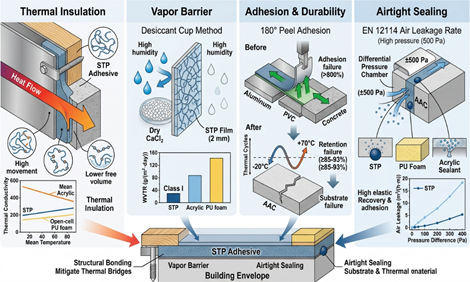
Figure 1. Schematic representation of our study.
4. CONCLUSIONS
Thermal conductivity of the STP hybrid adhesive ranged from 0.103 W/(m·K) at 20°C to 0.118 W/(m·K) at 40°C. While higher than PU foam, this is sufficient to eliminate point thermal bridges in metal-to-concrete or metal-to-metal connections when applied in 10–20 mm thickness. Water vapor transmission rate was 4.8 g/(m²·day) for a 2 mm thick film, meeting Class I vapor retarder requirements. This enables the adhesive to function as a built-in vapor barrier without additional tapes or membranes. Peel adhesion exceeded 3.8 N/mm on aluminum and PVC, and 3.4 N/mm on OSB after 7 days cure. After 10 thermal cycles (-20°C to +70°C), retention remained above 90% on non-porous substrates and 85% on AAC. No adhesive failure mode occurred. Air leakage rate through a 2 mm STP-bonded joint at ±500 Pa was 0.12 m³/(h·m), outperforming PU foam (0.31) and acrylic sealant (0.28) by a factor of 2.3–2.6. Unified functionality: The STP adhesive successfully combines structural bonding, thermal bridging mitigation, vapor control, and airtight sealing in a single material layer, reducing assembly complexity and potential failure points.
5. References
[1] ASTM E96/E96M-22. (2022). Standard Test Methods for Water Vapor Transmission of Materials. ASTM International, West Conshohocken, PA.
[2] EN 12114:2000. (2000). Thermal performance of buildings — Air permeability of building components and building elements — Laboratory test method. European Committee for Standardization, Brussels.
[3] ISO 8301:1991. (1991). Thermal insulation — Determination of steady-state thermal resistance and related properties — Heat flow meter apparatus. International Organization for Standardization, Geneva.
[4] ISO 8510-2:2006. (2006). Adhesives — Peel test for a flexible-bonded-to-rigid test specimen assembly — Part 2: 180° peel. International Organization for Standardization, Geneva.
[5] Hens, H. S. (2017). Building physics-heat, air and moisture: fundamentals and engineering methods with examples and exercises. John Wiley & Sons.
[6] Koohestani, B., Darban, A. K., & Mokhtari, P. (2018). A comparison between the influence of superplasticizer and organosilanes on different properties of cemented paste backfill. Construction and Building Materials, 173, 180-188.
[7] Villegas, J. E., Gutierrez, J. C. R., & Colorado, H. A. (2020). Active materials for adaptive building envelopes: A review. J. Mater. Environ. Sci, 2020, 988-1009.
[8] Klingenberg, K. (2020). Passive House (Passivhaus). In Sustainable Built Environments (pp. 327-349). New York, NY: Springer US.
[9] Din, D. I. N. (2018). 4108-3 Thermal Protection and Energy Economy in Buildings-Part 3: Protection against Moisture Subject to Climate Conditions-Requirements. Calculation Methods and Directions for Planning and Construction.
[10] Ramezani, F., Ayatollahi, M. R., Akhavan-Safar, A., & Da Silva, L. F. M. (2020). A comprehensive experimental study on bi-adhesive single lap joints using DIC technique. International Journal of Adhesion and Adhesives, 102, 102674.