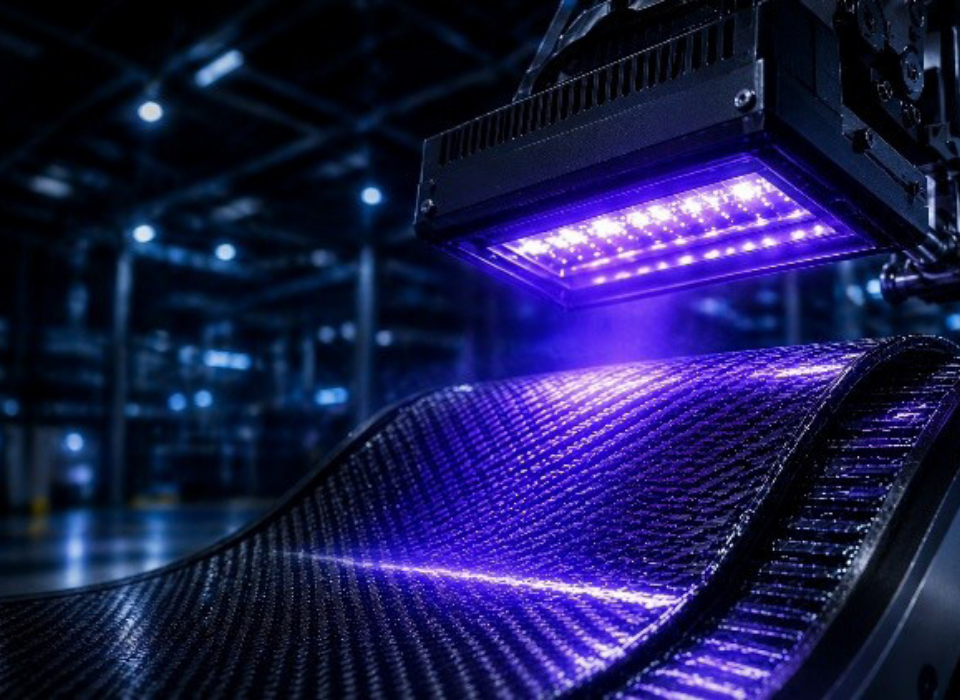




The use of composite materials has become increasingly prevalent across various industries due to their unique properties, such as high strength-to-weight ratio, durability, and resistance to environmental factors. However, the challenge of recycling these complex materials has long been a barrier to their widespread adoption. Traditional recycling methods have often fallen short, leading to environmental concerns and resource inefficiency. However, recent advancements in composite recycling techniques are beginning to address these issues, offering new possibilities for sustainable material management.
The Challenge of Composite Recycling
Composites are materials made from two or more constituent materials with significantly different physical or chemical properties. The most common types are fiber-reinforced polymers (FRPs), where a polymer matrix is reinforced with fibers such as carbon or glass. These materials are integral in industries ranging from aerospace and automotive to construction and wind energy.
The very properties that make composites so valuable also make them difficult to recycle. The strong bonding between the matrix and the fibers, which gives composites their strength, also makes them challenging to break down. Traditional recycling methods, such as mechanical grinding or incineration, can result in a significant loss of material properties and are often not economically viable.
Mechanical Recycling Techniques
Mechanical recycling involves grinding composite materials into small particles or fibers, which can then be used as filler material in other products. While this method has been around for some time, recent advancements have improved its efficiency and the quality of the recycled material. Innovations include:
1. High-Performance Milling: Advanced milling techniques now allow for more precise grinding of composite materials, producing fibers with less damage and higher aspect ratios. This improves the mechanical properties of the recycled material, making it more suitable for high-value applications.
2. Thermoplastic Composite Recycling: Thermoplastic composites, which are easier to remelt and reshape than thermoset composites, are increasingly being used. These materials can be ground and then reprocessed into new composite products with minimal loss of properties.
Chemical Recycling Techniques
Chemical recycling methods involve breaking down the composite material into its constituent chemicals, which can then be reused to produce new composites. These methods are particularly effective for thermoset composites, which cannot be remelted like thermoplastics. Recent advancements in this area include:
1. Solvolysis: This process uses solvents to dissolve the polymer matrix, allowing the fibers to be recovered intact. Recent developments in green solvents and process optimization have made solvolysis more environmentally friendly and economically viable.
2. Pyrolysis: Pyrolysis involves heating composite materials in the absence of oxygen, breaking them down into gases, liquids, and solid residues. Advances in this technique have improved the quality of the recovered fibers, making them suitable for reuse in high-performance applications.
3. Hydrothermal Processing: This method uses supercritical water to break down composite materials into their basic components. Recent research has focused on optimizing the process to increase yield and reduce energy consumption.

Emerging Technologies in Composite Recycling
Beyond mechanical and chemical recycling, several emerging technologies show promise in overcoming the challenges of composite recycling:
1.Microwave-Assisted Recycling: Microwave-assisted recycling is an innovative technique that uses microwave radiation to selectively heat and break down the polymer matrix in composite materials, allowing for the recovery of reinforcing fibers such as carbon or glass with minimal damage. The process leverages the unique interaction of microwaves with different materials, targeting the polymer matrix while leaving the fibers largely unaffected. As the matrix heats and decomposes, the fibers can be extracted in good condition, retaining their structural properties for reuse. This method is energy-efficient compared to traditional thermal processes and has a lower environmental impact due to the selective heating of the matrix. However, challenges remain in scaling up this technology for industrial use and in fine-tuning the process for different types of composites.
2.Electrochemical Recycling: Electrochemical recycling utilizes electrochemical reactions to break down the polymer matrix in composite materials. By placing the composite in an electrochemical cell and applying an electric current, redox reactions are induced within the matrix, causing it to degrade into smaller molecules and allowing the fibers to be recovered intact. This technique offers precise control over the recycling process, making it potentially more efficient and environmentally friendly than traditional methods. The ability to adjust electrochemical parameters for different composite types adds versatility to this approach. Despite its promise, electrochemical recycling is still in the early stages of development, with challenges such as high operational costs and the durability of the electrochemical equipment needing to be addressed before it can be widely adopted.
3.Biodegradable Composites: Biodegradable composites represent a forward-looking approach to materials design, aiming to eliminate the need for traditional recycling processes altogether. These composites are made from biodegradable matrices, such as polylactic acid or polyhydroxyalkanoates, combined with natural fibers like hemp or flax. Designed to decompose naturally after their useful life, biodegradable composites break down under specific environmental conditions through microbial activity or exposure to moisture and heat. This makes them highly sustainable, reducing environmental impact and aligning with circular economy principles.
However, biodegradable composites currently face performance limitations, particularly in high-stress applications, and are more costly to produce than traditional composites. Research continues to improve their durability and predictability in degradation, with the hope that these materials will become more widely used in industries prioritizing sustainability.
While these advancements are promising, the commercialization of new recycling technologies remains a challenge. Scaling up these processes to an industrial level requires significant investment, as well as collaboration across the supply chain. However, the growing emphasis on sustainability and the increasing cost of raw materials are driving interest in recycled composites.
Governments and regulatory bodies are also playing a role by implementing stricter regulations on waste management and encouraging the use of recycled materials through incentives and mandates. As a result, companies are beginning to invest in composite recycling infrastructure and incorporate recycled materials into their products.
The advancements in composite recycling techniques represent a significant step forward in addressing the environmental challenges associated with composite materials. While there is still work to be done to make these methods economically viable on a large scale, the progress made so far is encouraging. As these technologies continue to develop, they have the potential to transform the way composite materials are managed, leading to more sustainable and circular use of resources in the future.
Sources
https://www.sciencedirect.com/science/article/abs/pii/S2214993721001378
https://www.windpowerengineering.com/advancements-in-carbon-fiber-composites-recycling/