


Interview: Murat Soygür
As the world’s largest producer of graphene nanotubes, OCSiAl helps reduce carbon emissions across various industries by offering solutions that deliver higher performance with reduced raw material consumption. Said Hocine, Technical Sales Manager EMEA at OCSiAl, shared valuable insights on a wide range of key topics in our interview, including the company’s products and services, R&D activities, and sustainability goals.
Could you briefly tell us about yourself and your professional background?
My name is Said Hocine, Technical Sales Manager EMEA at OCSiAl. I am based in our headquarters in Leudelange, Luxembourg, in the heart of Europe. I’ve been with the company for almost ten years now. I first joined in operational roles and later moved into sales, where I had the opportunity to collaborate with many leading paint and coatings companies across Europe in supporting the implementation of graphene nanotube-based solutions in various formulations. Since last year, I have had the honor of being responsible for the Turkish market, and I’m fortunate to work closely with our local distributor, Hayim Pinhas, whose support is essential in helping us serve customers effectively.
What is the long-term vision of OCSiAl, and how has it evolved over the years?
Rooted in science, and now the world’s industry leader, OCSiAl pursues a clear long-term vision: to improve the specific properties of all base materials, making the world a better place for all living beings. What has evolved is our capacity to fulfill it. Today, OCSiAl is the world’s largest producer of graphene nanotubes (also known as single wall carbon nanotubes or SWCNTs), offering an additive that can be used across up to 50 percent of materials markets globally. We have built a strong intellectual property foundation with dozens of patents and patent applications in various countries, and our production capacity which is now 60 tonnes and will scale four and more times within the next year. In total, we currently support more than 1,500 partners around the world, with a team of over 450 people and a strong global network of offices and distributors. As we look to the future, our goal is to help even more industries to adopt graphene nanotubes and to open new applications where they can become a standard performance additive.
Which industries are experiencing the fastest growth for OCSiAl solutions?
For OCSiAl, the paint and coatings industry is currently one of the fastest-growing segments. We see particularly strong momentum in colored ESD flooring systems and conductive tank linings, where manufacturers are looking for stable, long-lasting conductivity that does not compromise the final product performance. The evolution of safety standards is also accelerating this trend, and despite the young age of the technology, OCSiAl’s graphene nanotubes produced under the trade mark TUBALL ™️ have already proven to be a reliable, easy-to-use, and scalable solution, which gives formulators the confidence to adopt them widely.
Beyond coatings, sectors such as energy storage, elastomers, and thermoset composites are also expanding rapidly as they integrate nanotube-based improvements in conductivity and mechanical performance.
Can you share some insights about your R&D activities?
R&D has always been a strategic pillar for OCSiAl. Our objective is not only to produce graphene nanotubes at industrial scale but also to make their use simple, reliable, and accessible for manufacturers.
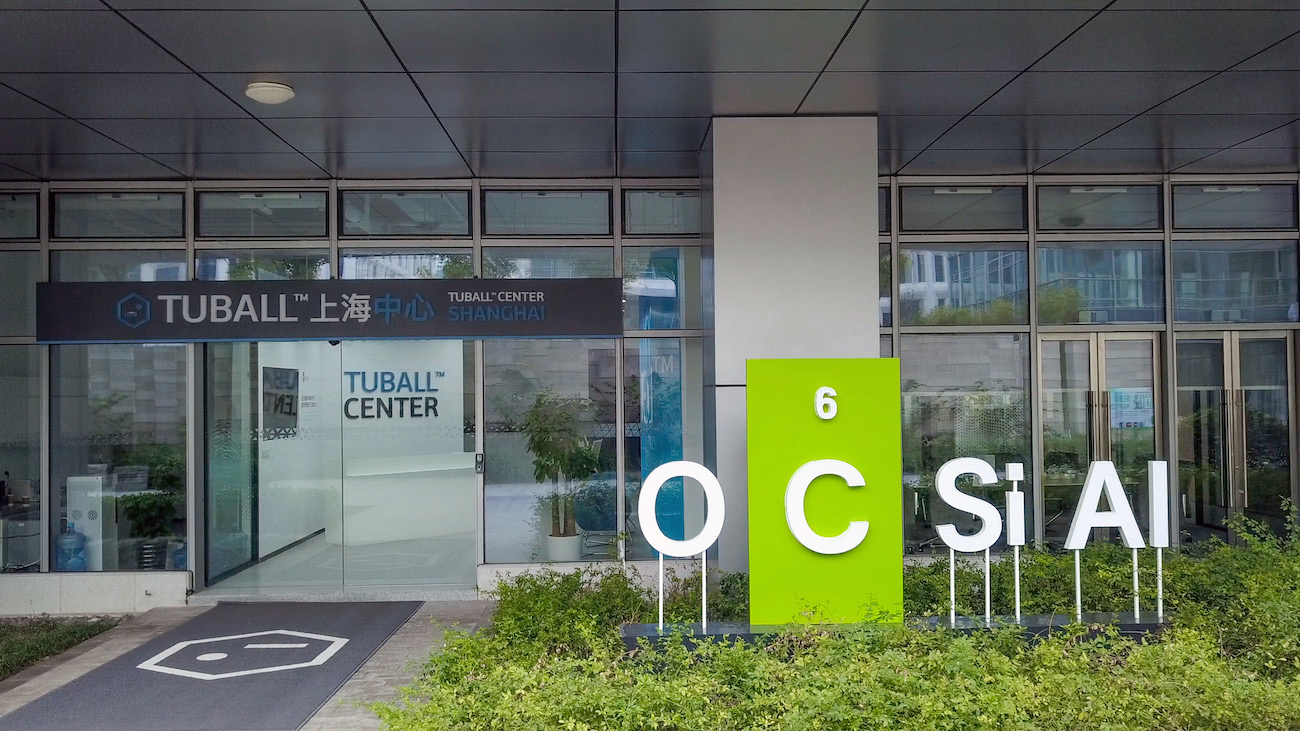
Today, our R&D department brings together scientists with deep expertise in physics, chemistry, and materials science, built over more than 15 years. Their work is centered in our “TUBALL Centers,” which are the dedicated hubs for production technology, development, and new material prototyping, located in Luxembourg, Serbia, and China. These centers cover the full development chain, from fundamental research to fine-tuning TUBALL ™️ applications on pilot industrial lines.
A major focus for us is to make nanotubes easy to use in real industrial formulations. This means developing nanotube-based dispersions and concentrates that provide stable conductivity at ultralow dosages starting from 0.01 wt.%, preserving the original mechanical properties of the system, and maintaining the wide variety of colors and aesthetic appeal. We apply the same approach in polymers, elastomers, and energy storage, where our teams continuously optimize how nanotubes can enhance material performance. Overall, our R&D efforts aim to expand the range of practical, ready-to-use solutions that deliver consistent results for manufacturers across all these sectors.
What are the key elements of OCSiAl’s sustainability strategy?
By enabling our customers to use fewer raw materials while achieving higher performance, our solutions help reduce carbon emissions across multiple industries. At the same time, minimizing the environmental impact of OCSiAl’s own operations is an equally important priority for the company.
In all our business activities, we do not just comply with applicable environmental legislation but integrate energy-efficient practices wherever possible on top of it. This commitment is reflected in very concrete actions. It begins with the strict selection of our product packaging materials and extends to the continuous monitoring of our supply chain to ensure responsible and efficient logistics. Recently, we switched to recycled, lightweight packaging for nanotubes to cut transport emissions by up to 50%. Also, the new packaging for TUBALL™ concentrates now consists of 50% recycled plastic, while secondary cardboard packaging is made of 70% recycled material.
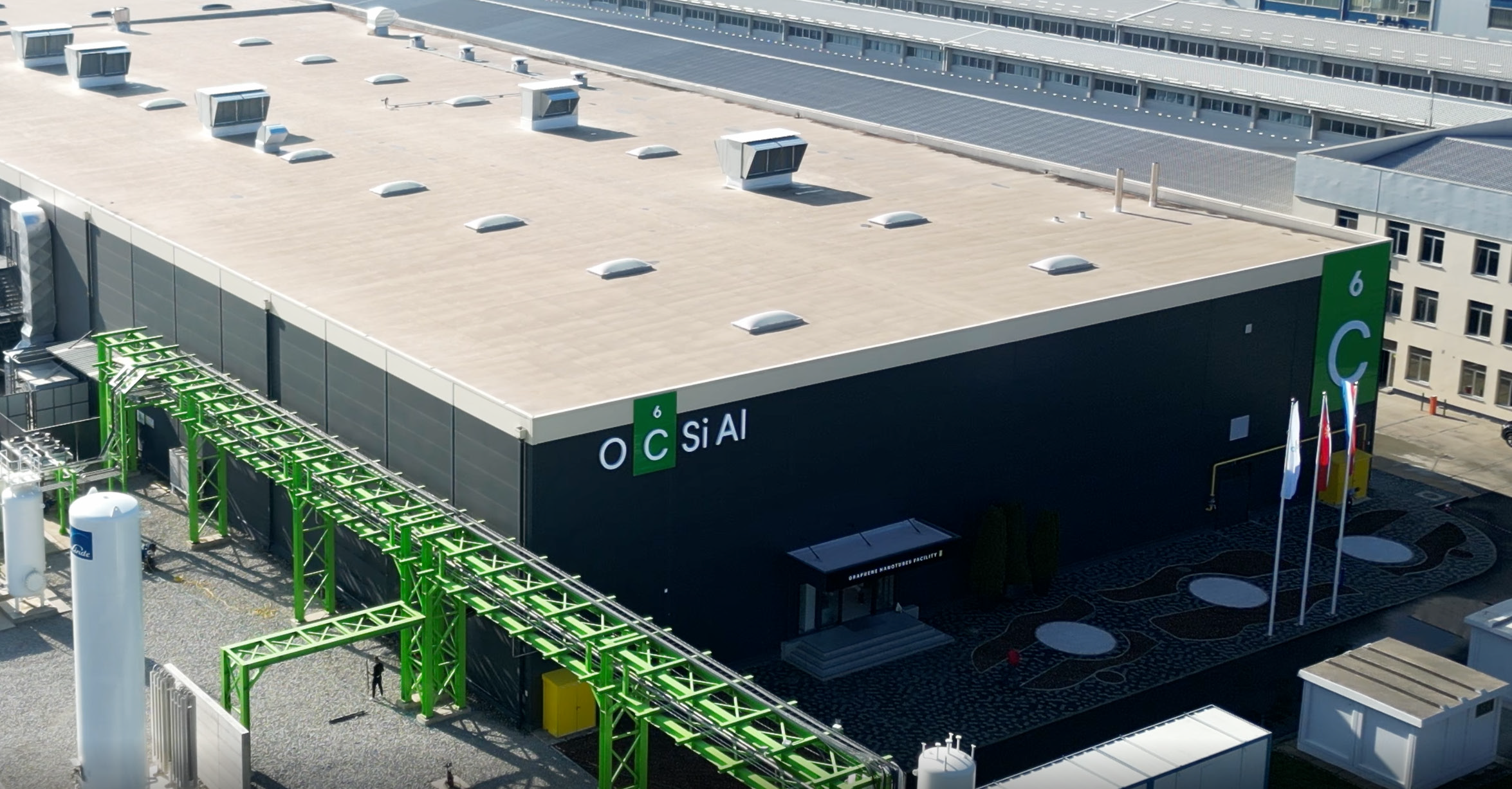
A major part of our sustainability strategy is also the sourcing of clean energy for our production facilities. Our plant in Serbia already operates on 100 percent green hydroelectric power, and for our upcoming facility in Luxembourg, we have already held preliminary discussions with our energy local supplier and have every reason to believe that our Differdange facility will be powered entirely by green energy too.
All these efforts are driven by one clear goal: lowering CO₂ emissions across our entire value chain, both through the solutions we offer and the way we operate as a company.
How do you foresee the growth trends in the global nanotube market over the next five years?
Over the next five years, we expect strong growth in the global graphene nanotube market as more industries adopt the advanced technologies to make their end-products more functional, more durable, and with higher performance. A major driver will be the increase in OCSiAl’s production capacity, which will allow us to support existing markets with even more accessible solutions. At the same time, production scaling will help industries to replace, partially or in full, components that present handling or regulatory challenges, offering a cleaner, safer, and more reliable alternative in real manufacturing environments. With these developments, nanotubes are expected to move from being a high-performance additive used in specific applications to a mainstream solution adopted across many industries.