Next-Generation Solutions in Floor Waterproofing with PUD-Supported Composite Structures
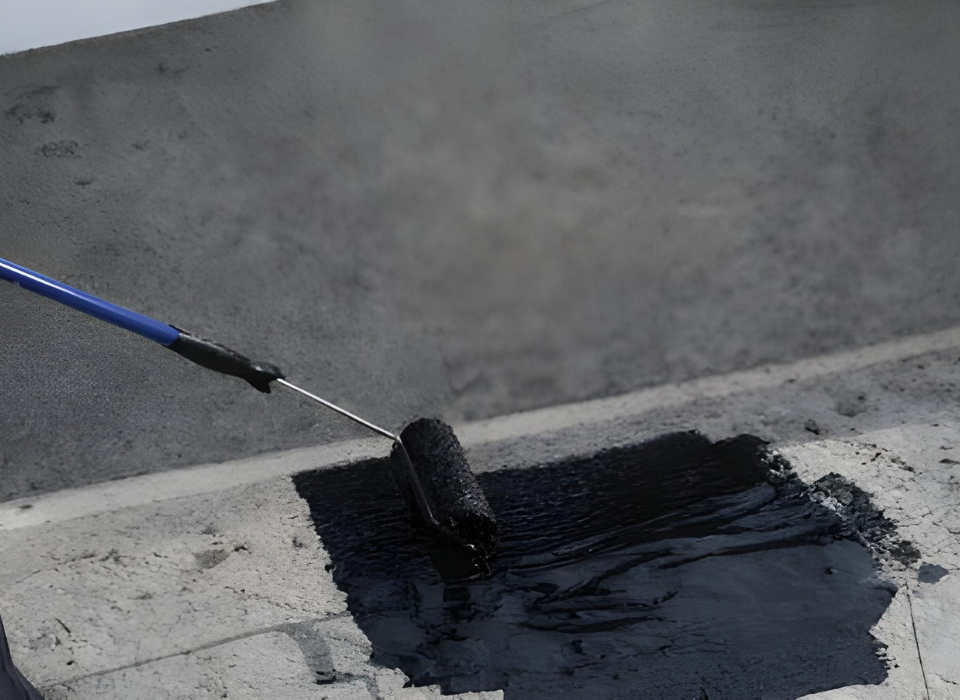
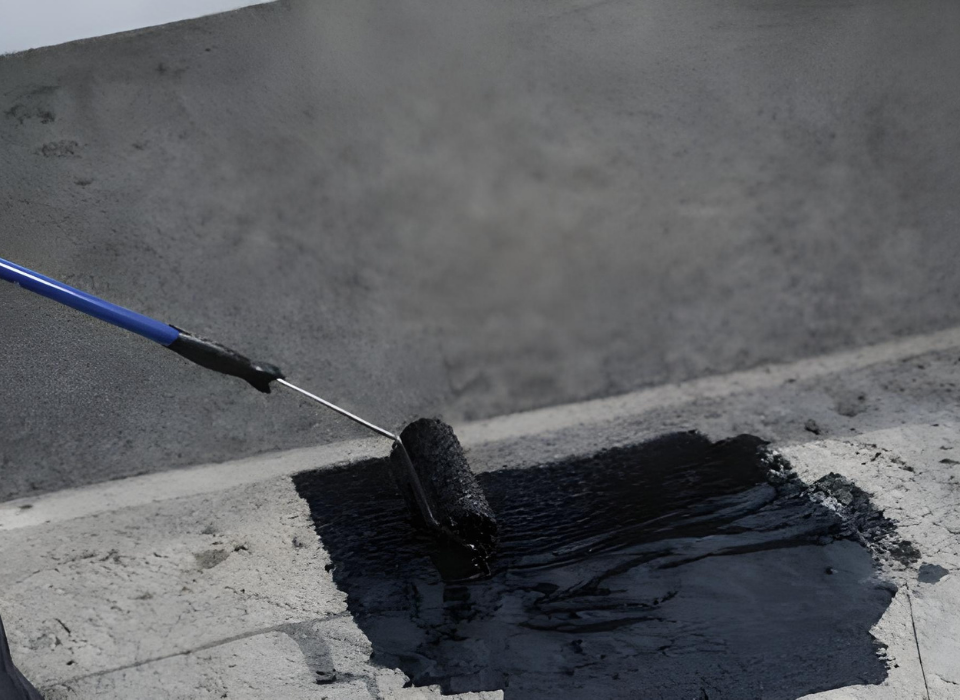
Floor waterproofing systems have evolved beyond being merely a barrier protecting structures against water, moisture, and chemical exposure; they have become a critical engineering solution that directly determines the long-term durability, service life, and performance continuity of structures. Today, increasing performance expectations from floor waterproofing systems have made it necessary to design these solutions as multilayered and functionally differentiated composite systems.

Dr. Şahin Öztürk
PUD Technical Sales & Business Development Manager
İnterplast Kimya
Introduction
Floor waterproofing systems have evolved beyond being merely a barrier protecting structures against water, moisture, and chemical exposure; they have become a critical engineering solution that directly determines the long-term durability, service life, and performance continuity of structures. Today, increasing performance expectations from floor waterproofing systems have made it necessary to design these solutions as multilayered and functionally differentiated composite systems.
Water-based polyurethane dispersions (PUD) stand out as pioneers of next-generation solutions in floor waterproofing, thanks to the balance of elasticity and durability they provide, along with their system compatibility.
In this context, the success of PUD-supported composite systems used in floor waterproofing is directly related to the correct selection of binder chemistry and proper application. Field feedback from İnterplast Kimya, which has been developing water-based polyurethane dispersions for many years, and from companies supplying the main resins for these systems, clearly demonstrates the critical role of PUD technology in floor waterproofing.
The Need for Composite Systems in Floor Waterproofing
Floors are dynamic surfaces exposed to structural movements, thermal expansions, continuous mechanical loads, and moisture effects. Under these conditions, waterproofing systems may:
• Crack when too rigid,
• Exhibit mechanical weakness when excessively soft,
• Cause interlayer delamination when adhesion is insufficient.
For this reason, modern floor waterproofing solutions are built on a composite system approach in which each requirement is addressed by a separate component. In this structure, concrete or screed forms the load-bearing phase; polymer binders provide elasticity and adhesion, while mineral fillers and fiber reinforcements ensure mechanical balance and system stability.
The Role of PUD-Supported Structures in Floor Waterproofing
Water-based polyurethane dispersions play a critical role as a balancing binder phase in composite floor waterproofing systems. PUD-supported products provide:
• High adhesion to cement and concrete surfaces,
• A continuous elastic film structure,
• Effective microcrack-bridging capability,
• High chemical compatibility with bituminous and mineral-based systems,
• Low VOC content and environmentally friendly application advantages.
Compared to conventional waterproofing solutions, they enable the creation of safer, more flexible, and longer-lasting systems.
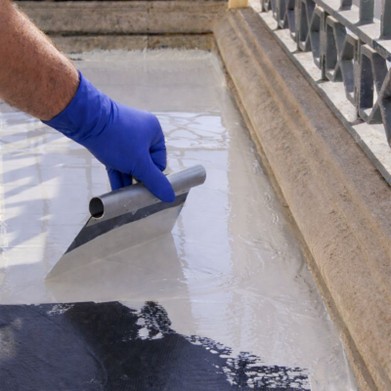
PUD-supported composite systems maintain film integrity in outdoor environments thanks to their high UV resistance, tolerate floor movements with high elasticity and tensile–elongation capacity, prevent permanent deformation through rebound (elastic recovery) effect, and offer safer and easier application compared to prepolymer systems due to their single-component, non-reactive structure.
The Strategic Role of PUD in Bitumen- and Cement-Based Systems
One of the most technical challenges in floor waterproofing is enabling systems with completely different chemical characteristics to work together under the same performance targets. The viscoelastic and aging-prone structure of bitumen and the rigid, brittle mineral character of cement create a difficult combination with conventional approaches. At this point, PUDs stand out not only as binders but also as chemical and mechanical balancing components.
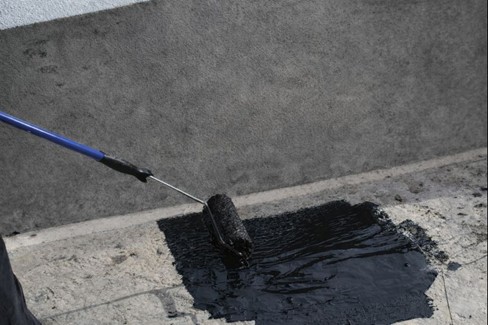
In bitumen emulsion systems, the use of PUD controls the natural flowability and oxidative aging tendency of bitumen, imparting measured and permanent elasticity to the film structure. As a result, brittleness and cracking risks at low temperatures are reduced, and film integrity is maintained for longer periods under UV exposure and thermal cycling. At the same time, PUD enhances the interfacial interaction between bitumen and mineral surfaces, significantly improving interlayer adhesion and system stability.
In cement- and concrete-based systems, PUD modifies the inherently rigid mineral matrix with a flexible polymer network, limiting microcrack formation. Thanks to its film-forming and binding capability, PUD reduces dusting on cement surfaces, provides crack-bridging performance, and creates a highly adhesive, homogeneous, and controlled substrate for subsequent waterproofing layers.
With this dual compatibility, PUD-supported composite systems are not merely auxiliary additives in bitumen- and cement-based floor waterproofing solutions, but strategic components that define system performance, manage durability, and determine long-term service life.
Advantages of PUD Systems Compared to Polyurethane Prepolymers and Acrylic Systems
In addition to PUDs, single- or two-component polyurethane prepolymers and acrylic-based products are widely used in floor waterproofing. Although both systems deliver successful results in certain applications, prepolymer systems present limitations in application safety, while acrylic systems may face constraints in long-term performance.
Single / Two-Component Polyurethane Prepolymer Systems
Reactive polyurethane prepolymers provide high mechanical strength and chemical resistance through chemical curing mechanisms. However, these systems:
• Require strict control during application due to moisture sensitivity,
• Carry pot-life or mixing error risks in 1K and 2K systems,
• May cause shrinkage and internal stress during curing,
• May exhibit a tendency toward rigidity after full curing.
These factors reduce system tolerance, particularly against application challenges and user errors.
Acrylic-Based Waterproofing Systems
Acrylic systems are preferred due to ease of application and cost advantages. However:
• They may become brittle over time under UV exposure,
• They exhibit low tensile–elongation capacity and a tendency toward permanent deformation (creep),
• They have limited mechanical and chemical resistance.
Therefore, performance loss may occur in long-term floor waterproofing applications.
Water-based polyurethane dispersions offer a balanced and safe solution between these two approaches:
• Application safety thanks to non-reactive film formation,
• High elasticity combined with controlled mechanical strength,
• Resistance to permanent deformation through rebound effect,
• Superior UV and aging resistance compared to acrylics and aromatic prepolymers,
• Single-component, low-VOC, and user-friendly structure.
These characteristics make PUD systems particularly prominent in multilayer composite floor waterproofing solutions.
Multilayer Composite Floor Waterproofing Structure
In practice, PUD-supported composite systems are generally applied according to the following layered structure principle:
1. Primer Layer: Penetrates surface pores, prevents dusting, regulates surface energy, and ensures strong chemical bonding with subsequent layers.
2. Elastic Main Waterproofing Layer: The primary film layer providing water impermeability, high elasticity, and continuity. It forms the foundation of system performance.
3. Fiber-Reinforced or Filled Intermediate Layer (when required): Used to enhance mechanical strength and control microcracks.
4. Top Protective Layer: The final layer protecting the system against abrasion, chemical exposure, and environmental factors.
Through this structure, floor waterproofing evolves from single-function applications into a holistic, engineering-based performance system.
Performance Advantages and Field Outcomes
PUD-supported composite floor waterproofing systems clearly demonstrate the following performance advantages in the field:
• Long service life, UV resistance, and stable film structure,
• High elastic tolerance against thermal and mechanical movements,
• Reduced risk of permanent deformation, cracking, and interlayer delamination thanks to rebound (elastic recovery) effect,
• Durable and balanced resistance against water, moisture, and chemicals,
• Reduced application errors and lower maintenance–repair costs due to their single-component and non-reactive structure.
These properties make PUD-supported systems decisive, particularly in application areas requiring high performance and long service life, such as industrial floors, parking garages, terraces, and wet areas.
Technical Observations and System Approach
Application experience shows that most problems encountered in floor waterproofing stem from deficiencies in raw material selection and system design.
Rather than forcing elasticity, adhesion, and durability into a single product, PUD-supported composite systems distribute functions into appropriate layers, providing more balanced and safer solutions. This approach offers significant advantages both in terms of application ease and long-term performance.
The field success of high-performance floor waterproofing solutions is often based not on a ready-made product approach but on formulations structured with the correct base resins. At this point, manufacturers developing water-based polyurethane dispersions and offering formulation solutions enable product developers and applicators to create system-based, flexible, and long-lasting solutions. With its water-based polyurethane dispersion portfolio, İnterplast Kimya is among the companies supplying base resins for such composite floor waterproofing applications.
Conclusion
Today, floor waterproofing is no longer merely an application that blocks water; it has become an engineering-based system that directly affects structural performance.
PUD-supported composite structures, with their environmentally friendly nature, high elasticity, and flexibility in multilayer system design, form the foundation of next-generation solutions in floor waterproofing. Properly designed composite floor waterproofing systems provide strong and sustainable solutions that meet both current needs and future performance expectations of structures.
Galeri